At the office of Simply Smiles Dental Brooklyn, we focus on blending modern dental technology with thoughtful, patient-centered care. Our team stays current with advances in restorative materials and techniques so we can offer solutions that restore both the function and appearance of damaged teeth.
Teeth are remarkably strong, but they can still be compromised by decay, accidents, or wear. When a simple filling won't provide enough support, a full-coverage restoration becomes the right choice to protect a compromised tooth and preserve your overall oral health.
Ceramic crowns are a metal-free alternative that give clinicians the ability to rebuild teeth with natural-looking aesthetics and reliable strength. In the sections that follow, you’ll find practical information about when crowns are recommended, what ceramic materials offer, how we select the best option for your smile, and what to expect after treatment.
A crown becomes necessary whenever the remaining tooth structure is too weak to support normal chewing or when a restoration must protect a tooth from further breakdown. Crowns fully encase the visible portion of the tooth, stabilizing it and restoring proper contours for chewing and speech.
Dentists commonly recommend crowns after large cavities, significant fractures, or root canal therapy. They’re also the restoration of choice when replacing a missing tooth with an implant or when anchoring a fixed bridge. In each case, the goal is to return the tooth to a safe, functional state while minimizing the risk of future problems.
Beyond protection, crowns can address cosmetic concerns such as discoloration, misshapen teeth, or teeth that are uneven in size. Because ceramic options closely mimic natural tooth structure, they are particularly useful when aesthetics are a priority as well as durability.
To rebuild a tooth with extensive decay or structural damage
To replace a large or fractured filling that no longer provides strength
To restore a dental implant as a stable, lifelike replacement tooth
To serve as the supporting teeth (abutments) for a traditional dental bridge
To protect a tooth following root canal therapy
To refine the appearance of an undersized, stained, or oddly shaped tooth
To correct bite issues that benefit from restoring proper tooth height and form

All-ceramic crowns are designed to reproduce the optical properties of natural teeth, including translucency and sheen. This makes them an excellent choice for visible front teeth and for patients who want a seamless, lifelike result. Because there’s no metal beneath the surface, ceramic crowns eliminate the risk of a dark line at the gumline.
Material science has advanced considerably, and today's dental ceramics are both strong and highly aesthetic. Newer systems combine toughness with lifelike appearance so that crowns can withstand normal chewing forces while still blending naturally with adjacent teeth.
Biocompatibility is another advantage: ceramic restorations are metal-free, which can be a meaningful benefit for people with sensitivities to certain metals. They’re also resistant to staining and maintain their color stability over time when cared for properly.
Excellent aesthetic match to surrounding teeth, including natural translucency
Conservative preparation is often possible because some ceramics can be made thinner
Lighter weight and gentle interaction with the surrounding soft tissues
No metal margin that can become visible over time at the gumline
Resistant to surface staining and discoloration
Metal-free composition suitable for patients with metal sensitivities
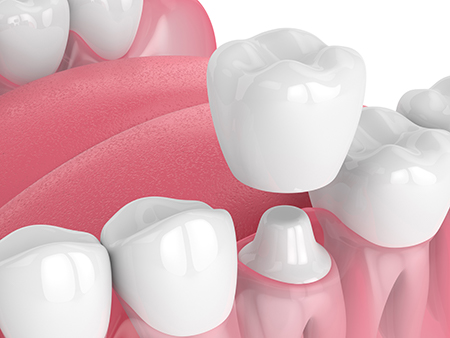
Not all ceramic materials are the same, and selecting the appropriate option depends on the location of the tooth, the amount of force it will bear, and the aesthetic demands of the situation. Front teeth need exceptional translucency, while back teeth often require materials optimized for strength.
Our clinical assessment considers bite dynamics, opposing teeth, existing restorations, and your cosmetic goals. We also evaluate how much natural tooth structure can be preserved during the preparation and whether additional procedures (for example, a core build-up or implant restoration) are required to ensure a durable outcome.
Once we determine the functional and aesthetic requirements, we select from contemporary ceramic options that balance strength and appearance. Each material has specific properties that make it a good fit for particular clinical scenarios.
Some commonly used ceramic choices include:
Lithium disilicate porcelain — a versatile, aesthetic option often used for front and premolar crowns
Leucite-reinforced pressable porcelain — valued for lifelike glazing and color-matching in cosmetic cases
Solid or monolithic zirconia — exceptionally strong and often selected for posterior teeth or cases with high bite forces
High-translucent zirconia — blends strength with improved aesthetics for visible areas that also require durability

With proper oral hygiene and routine professional care, ceramic crowns can provide many years of dependable service. Brushing twice daily with a fluoride toothpaste and flossing around the crown margins helps prevent decay at the tooth-restoration interface.
It’s important to monitor habits that place excessive force on restorations. If you clench or grind your teeth, a custom nightguard can protect crowns and the rest of your dentition from accelerated wear. During routine visits, we check the integrity of the crown and the health of the supporting tooth and gums.
Minor issues such as a loose crown or wear to the opposing tooth should be addressed promptly to prevent more extensive repair later. If a crown needs to be replaced, modern ceramic systems allow for efficient, comfortable procedures that prioritize tissue health and aesthetics.
We’ll provide clear, personalized instructions after placement and schedule follow-up assessments to ensure your restoration performs as intended. Our goal is predictable, long-lasting results that support your oral health and overall comfort.
At Simply Smiles Dental Brooklyn, clinical decision-making is rooted in preserving tooth structure, using durable materials, and employing contemporary technologies. We evaluate each case individually to match the ceramic solution to your functional needs and cosmetic goals.
Advanced tools such as digital impressions and CAD/CAM workflows allow for more precise fit and predictable aesthetics. These technologies also streamline the laboratory process and can reduce the number of visits required in some cases.
Our team emphasizes communication and education: we explain the treatment rationale, outline what to expect during procedures, and provide straightforward guidance for long-term care. That clarity helps patients make informed choices and feel confident about their restorative plan.
In summary, ceramic crowns offer a metal-free, natural-looking, and durable way to restore teeth that need more than a filling. If you’re considering a crown or want to learn which ceramic option best suits your smile, please contact us for more information.

While a dental filling is designed to replace a portion of a decayed or damaged tooth, a dental crown offers full coverage to restore the tooth’s entire outer surface. A well-fitting dental crown not only protects and strengthens the underlying tooth structure, but it also restores the tooth’s appearance and function.
The procedure for getting an all-ceramic crown is much like the procedure for getting any other type of crown. In all cases, the tooth needs to be prepared, an impression taken, and a permanent crown cemented into place. A single all-ceramic crown can typically be fabricated over the course of two visits. However, with CAD/CAM technology, a same-day crown can be fabricated from start to finish in a single visit. With the first approach, a temporary crown is typically worn until the second visit, when the permanent restoration is placed. As with every treatment plan, our office will explain your best options in care.
As the name implies, a temporary crown is only worn for a short time until the permanent crown is placed. A temporary crown is typically fabricated from durable tooth-colored dental acrylics. While designed to protect the underlying tooth between appointments, and until your new permanent crown gets placed, a temporary crown is also fabricated to look like a natural tooth and maintain the look of your smile.
While you should feel better having an attractive and functional tooth to restore your smile, your tooth may feel a little sensitive following treatment. This initial sensitivity will subside. We take great care to make sure your new restoration looks great, fits well, and your bite is perfect. However, we’re always happy to make any minor adjustments to ensure your comfort.
With some exceptions, teeth with root canal procedures are typically restored and protected from further damage with a full-coverage crown. Based on what’s best for your smile, our office will recommend the most appropriate restoration to maintain the health and longevity of your tooth following a root canal procedure.
A dental crown is a long-term restoration that, if properly cared for, can serve you well for many years to come. Once your new crown is placed, it requires the same brushing, flossing, and periodic checkups as your natural teeth. Avoid biting your fingernails and chewing on hard or sticky objects such as ice, pencils, or taffy, which can damage or loosen your crown. Remember, clenching and grinding your teeth puts excessive pressure on both natural teeth and dental restorations. Unless treated, this habit can compromise the longevity and integrity of your dental work, including crowns.
Although your new all-ceramic crown restores the tooth's strength, form, and function, you can still develop dental disease in the absence of proper care. To prevent gum disease and tooth decay, it’s essential to brush and floss as instructed and see our office for routine checkups, cleanings, and care.
How long a dental crown lasts depends on various factors, including your level of oral care, diet, and oral habits. While the standard answer is that dental crowns can last anywhere from 5 to 15 years, existing literature confirms that most dental crowns remain in place at 15 to 20 years.
At the office of Simply Smiles Dental Brooklyn, we strive to provide the highest quality of care to address all your dental needs. Once we’ve had the opportunity to examine your smile, we can give you a clear picture of any dental issues that are present, along with a quote for how much treatment will be. The cost of dental crowns can vary a little, depending on the type of crown and its location. Our goals are to provide the highest quality of care and help patients begin treatment without additional financial stress or delay. We’re always happy to answer all your questions on dental insurance coverage, available financing, and payment plans.
Coverage for all-ceramic crowns depends on your dental insurance plan. Today, many dental plans provide some level of coverage for all-ceramic crowns. At the office of Simply Smiles Dental Brooklyn, we work with patients to optimize their dental benefits and get the care they need to maintain healthy and beautiful smiles!
Ceramic crowns are full-coverage restorations made entirely from dental ceramics and are used to rebuild teeth that are weakened by decay, fractures or extensive restorations. Unlike traditional crown systems that use a metal core, ceramic crowns are metal-free and rely on modern glass or crystalline structures for strength. They are crafted to replicate the shape and function of natural teeth while maintaining a lifelike surface texture.
Compared with porcelain-fused-to-metal crowns, all-ceramic crowns offer superior optical properties such as translucency and color depth, which helps them blend with adjacent teeth. Because there is no metal substructure, ceramic crowns eliminate dark margins at the gumline and reduce the risk of metal-related tissue reactions. Advances in ceramic materials also provide a balance of toughness and aesthetics, making them appropriate for many clinical situations.
A ceramic crown is recommended when the remaining tooth structure cannot reliably support a standard filling or when a tooth has suffered a large fracture or extensive decay. Dentists also commonly place crowns after root canal therapy to stabilize the treated tooth and prevent further breakage. Crowns are likewise used to restore teeth that serve as abutments for bridges or that will receive implant restorations.
When aesthetics are a priority, ceramic crowns are often preferred because they closely mimic natural enamel in translucency and color. They can also mask intrinsic discoloration and correct minor shape or size discrepancies to improve the overall appearance of a smile. Your clinician will weigh functional needs, cosmetic goals and the amount of remaining tooth structure when recommending a crown.
Common ceramic materials include lithium disilicate, leucite-reinforced porcelain, monolithic zirconia and high-translucent zirconia, each offering distinct properties. Lithium disilicate is prized for its combination of strength and lifelike translucency, making it a good choice for front and premolar crowns. Leucite-reinforced ceramics are valued for excellent glazing and color matching in highly cosmetic cases, while monolithic and high-translucent zirconia provide greater fracture resistance for posterior teeth and areas with heavy bite forces.
Selecting the appropriate ceramic involves balancing aesthetics, strength and the thickness that can be preserved during preparation. Stronger ceramics allow more conservative tooth reduction but may show different light transmission than natural enamel, so shade and translucency must be carefully managed. Your dentist will recommend a material that meets the long-term functional demands of the tooth while achieving the desired appearance.
The procedure begins with a clinical evaluation and imaging to confirm that a crown is the best restorative option and to plan the preparation. To prepare the tooth, the dentist removes decayed or weakened structure and shapes the remaining tooth to create a stable foundation for the crown. An impression—digital or conventional—is then taken to capture the prepared tooth and surrounding bite relationships, and a temporary restoration may be placed while the final crown is fabricated.
Final crowns can be fabricated in a dental laboratory or produced in-office using CAD/CAM milling systems, and the restoration is then tried in and adjusted for fit and occlusion. After any necessary adjustments, the crown is permanently bonded or cemented to the prepared tooth, restoring function and aesthetics. Some workflows allow same-day completion while others use a lab-fabricated crown that requires a follow-up visit for placement; your dentist will outline the recommended schedule based on clinical needs.
Digital impressions create a highly accurate three-dimensional record of the prepared tooth and the bite, which reduces the need for retakes and improves communication with the dental laboratory. Patients often find intraoral scanning more comfortable than traditional impression materials, and clinicians benefit from faster data transfer and consistent digital records. The improved precision directly contributes to better marginal fit and fewer adjustments at delivery.
CAD/CAM technology allows precise design and milling of crowns to match the tooth anatomy and occlusal scheme, which enhances function and aesthetics. In-office milling can shorten treatment timelines and offer same-day restorations when appropriate, while lab-based CAD/CAM workflows combine digital design with specialized laboratory finishing. When combined with digital shade-matching tools and high-resolution imaging, these technologies help produce restorations that integrate seamlessly with adjacent teeth.
Maintain excellent oral hygiene by brushing twice daily with fluoride toothpaste and flossing carefully around the crown margins to prevent decay at the restoration interface. Avoid chewing on very hard objects or using your teeth as tools, and be mindful of sticky foods that can place stress on the crown-cement bond. Attend regular dental checkups so your clinician can monitor the crown, the supporting tooth and the surrounding gum tissue for early signs of problems, and promptly report any sensitivity, looseness or changes in bite.
If you have a habit of clenching or grinding, a custom nightguard can protect crowns and opposing teeth from accelerated wear and reduce the risk of fracture. Minor chipping or wear to an opposing tooth may occur over time and can often be managed conservatively with adjustment or repair. With proper care and routine professional maintenance, ceramic crowns often provide many years of stable service.
Ceramic crowns are commonly used as the visible restoration on dental implants and can also serve as bridge pontics or abutments in fixed bridges. When used with implants, crowns may be screw-retained or cemented, and the connection type is chosen based on prosthetic and hygiene considerations. For bridges, crowns on the adjacent abutment teeth provide the support necessary to replace missing teeth with a stable, fixed solution.
Successful implant- or bridge-supported ceramic restorations require careful planning of occlusion, material selection and soft-tissue management to ensure long-term health. Your dentist will coordinate implant positioning, abutment choice and crown material to achieve a predictable, esthetic outcome that supports hygiene access. Regular professional evaluations help maintain peri-implant and periodontal health around prosthetic restorations.
Because ceramic crowns are metal-free, they are an excellent option for patients with known sensitivities or concerns about metal-containing restorations. Ceramic materials are highly biocompatible and are less likely to provoke allergic or inflammatory responses in soft tissues. Choosing a metal-free crown can also improve esthetics by avoiding metal-related discoloration near the gumline.
If a patient has a documented metal allergy, the dental team will select appropriate ceramic systems and bonding protocols to avoid contact with allergenic materials. Comprehensive evaluation and clear communication about medical history help ensure a suitable material choice for each individual. When metal-free options are indicated, the clinician will discuss the expected functional performance and long-term considerations.
Common complications include chipping or fracture of the ceramic, debonding of the crown and wear to opposing natural teeth, particularly when very hard ceramics are used. Risk factors include heavy occlusal forces, parafunctional habits and inadequate tooth preparation or bonding technique. Early detection through periodic exams allows clinicians to repair or adjust restorations before small issues become major problems.
Management strategies can include polishing or repairing minor chips, recementing loose crowns, adjusting the bite to reduce high spots and recommending protective appliances for patients who grind their teeth. When a restoration is extensively damaged or no longer fits properly, replacement with a new crown may be the most predictable solution. Your dentist will explain the best course of action based on the specific situation and pursue treatments that prioritize tooth preservation and tissue health.
Our approach centers on preserving natural tooth structure, selecting materials that match the functional demands and aesthetic goals, and using modern digital workflows to enhance precision and predictability. At SimplySmiles, we perform a comprehensive clinical assessment that includes occlusal analysis, evaluation of opposing dentition and discussion of cosmetic priorities. This individualized planning helps ensure the chosen ceramic system supports long-term success and patient satisfaction, and we prioritize clear communication so patients understand each step of the process.
Follow-up care and regular monitoring are integral to our restorative philosophy and help maintain the health of the crowned tooth and surrounding tissues over time. Our team customizes aftercare recommendations, provides guidance on protective appliances when indicated and schedules periodic evaluations to check integrity and function. This combination of careful planning, appropriate material selection and ongoing maintenance supports predictable, lasting outcomes for ceramic crown restorations.
Quick Links
Contact Us