
CEREC brings together digital design and precision milling to create ceramic restorations in a single visit. For patients, that means fewer appointments, no temporary crowns, and a streamlined process that respects your schedule without compromising quality. The system focuses on preserving healthy tooth structure while restoring appearance and function.
This approach is built around a chairside workflow: your dentist evaluates the tooth, captures a digital scan, designs the restoration on-screen, and fabricates the piece in the office. That integration reduces the steps where things can drift from the ideal fit, allowing for tighter margins and a restoration that feels and functions like a natural tooth.
Beyond convenience, CEREC emphasizes predictability. Because every stage—scan, design, and milling—happens under the same roof, the team can immediately inspect and adjust the restoration before placement. Patients often appreciate the reassurance that comes from being involved in the final fit and finish during a single appointment.
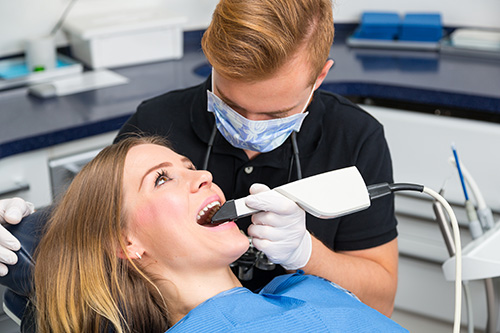
Your CEREC appointment begins with a focused assessment of the tooth and surrounding bite. The dentist will discuss goals for strength, appearance, and longevity, then prepare the tooth conservatively to remove decay or old restorative material. Preparation techniques prioritize preserving as much healthy enamel as possible.
Instead of traditional putty impressions, an ergonomic intraoral scanner captures a detailed 3D image of the prepared tooth and neighboring teeth. This digital impression is faster and more comfortable for most patients, eliminating the gag reflex and messy materials often associated with conventional molds.
Once the scan is complete, your dentist designs the restoration on a computer screen, adjusting shape, contacts and shade to blend with adjacent teeth. After approval, the data is sent to an on-site milling unit that sculpts the restoration from a solid block of ceramic. Final adjustments, glazing, and polishing are completed before the piece is bonded in place.
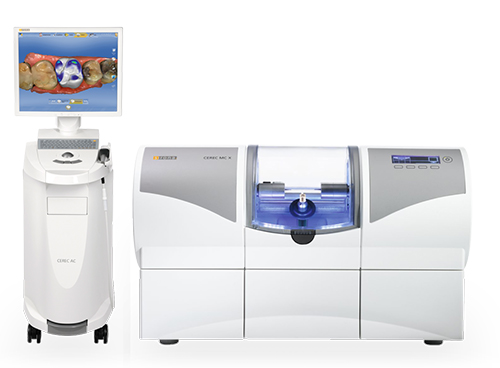
At the heart of CEREC is a CAD/CAM workflow that translates the scanned anatomy into a restoration tailored to your mouth. Digital design tools allow clinicians to refine occlusion, contours, and contact points before the restoration is ever milled. This reduces chairtime needed for adjustments and helps deliver a comfortable bite from day one.
The milling process sculpts restorations from high-strength ceramic blocks chosen for their esthetic and mechanical properties. Ceramics used with CEREC are engineered to mimic natural tooth translucency and color while providing reliable wear resistance. Because the material is homogenous, restorations resist staining and can maintain an attractive appearance for years with proper care.
Another advantage of the digital pathway is traceability: scanned records and design files can be archived for future reference. If a replacement or refinement is needed down the line, the original design can serve as a precise starting point, helping to preserve continuity in your dental care.

CEREC restorations combine high-strength ceramics with careful bonding protocols to create durable, attractive results. When properly designed and placed, these restorations stand up well to normal chewing forces while maintaining a natural translucency that complements surrounding teeth. The result is a restoration that looks subtle and integrates visually with your smile.
Maintenance after placement is straightforward: good oral hygiene, routine professional cleanings, and attention to parafunctional habits help protect the restoration over time. Ceramics are resistant to staining, but regular brushing and periodic polishing by a dental professional will preserve surface luster and color match.
For patients who grind their teeth or engage in heavy wear, your dentist will discuss protective measures such as nightguards and periodic evaluations. These proactive strategies help extend the life of any restoration and protect natural teeth from undue stress.
CEREC is an excellent option for many restorative needs—single crowns, inlays, onlays, and certain veneers—especially when the goals are conservative tooth preparation and a seamless esthetic result. However, every case is unique; complex situations involving extensive tooth loss, certain bite problems, or multi-tooth reconstructions may require a different approach or supplementary techniques.
During a comprehensive evaluation, your dentist will consider clinical factors such as the tooth’s structural needs, occlusion, gum health, and your cosmetic objectives. Imaging and functional assessment help guide a tailored recommendation, and the team will explain the expected outcomes and any alternative treatments that may better serve long-term oral health.
At Simply Smiles Dental Brooklyn, our focus is on personalized treatment planning. We work with patients to align restorative choices with lifestyle, functional demands, and esthetic priorities so that each restoration supports a healthy, confident smile for years to come.
Summary: CEREC represents a patient-centered evolution in restorative dentistry—bringing digital scanning, precise design, and in-office milling together to deliver natural-looking, durable ceramic restorations with fewer appointments. If you’d like to learn whether CEREC is a suitable option for your dental needs, please contact us for more information.

Today, there's no need to merely imagine how nice it would be to have a dental crown fabricated in a single visit. With CEREC technology and advanced systems of care, multiple trips to the dentist are a thing of the past! Now, one appointment is all it takes for our skilled and experienced dentist to design, fabricate, and place a naturally beautiful and long-lasting same-day crown. And, best of all, unlike conventional methods of care, you won't have to endure messy dental impressions, wear a temporary crown, or wait weeks for your permanent restoration to come back from the laboratory.
Offering a level of precision and comfort that exceeds conventional methods of care, CEREC technology is nothing short of amazing! Advanced CAD/CAM technology, which stands for computer-aided design and computer-aided manufacturing, enables our dentist to translate images from an optically scan tooth into a 3D virtual model upon which a custom crown can be digitally designed. Once this step is done, the detailed specs are then wirelessly transmitted to a chairside 3D milling machine to fabricate your new ceramic crown while you wait!
With conventional methods of care, a dental crown can take two to three visits to fabricate and place. However, thanks to the benefits of CEREC technology, we can prepare a tooth, then design, fabricate, and place your new crown, all while you wait.
With CEREC same-day crowns, there's none of the mess of conventional dental impressions, wearing dental temporaries, or waiting for the final crown to come back from the lab. Once the prepared tooth is optically scanned and the restoration digitally designed, your new crown can be milled from the highest quality of dental ceramics that very same visit.
CEREC same-day crowns and restorations are fabricated from the highest quality of dental ceramics. Because dental porcelain reflects light in much the same way as dental enamel, your new crown will look flawless, completely natural, and blend seamlessly with your smile.
A CEREC same-day crown offers much more than a convenient approach to getting a dental crown. It is also a high quality, naturally beautiful, extremely durable, and long-lasting dental restoration! The fact is, with proper oral hygiene and routine dental care your new crown will serve your smile well for many years to come.
CEREC is a chairside CAD/CAM system that combines digital scanning, on‑screen design and in‑office milling to create ceramic restorations in a single visit. Unlike traditional workflows that require physical impressions, laboratory fabrication and temporary crowns, CEREC captures a precise 3D scan and produces the final restoration while you wait. This integrated approach reduces the number of appointments and eliminates the need for provisional restorations in many cases.
The digital pathway also improves control over fit and aesthetics because the scan, design and milling occur under one roof and can be inspected and refined immediately. Clinicians can tailor contacts, occlusion and contours on screen before milling, which often reduces adjustment time at placement. For patients, the result is a restoration designed to function and appear like a natural tooth without prolonged treatment timelines.
CEREC is commonly used to fabricate single crowns, inlays and onlays that restore form and function after decay removal or repair of old restorations. Many practices also use CEREC for conservative veneers and some single‑unit implant restorations, depending on clinical needs and material selection. The system is optimized for same‑day single‑tooth solutions where a precise fit and natural appearance are priorities.
While CEREC excels for individual restorations, multi‑unit bridges and extensive full‑arch cases may be better served by laboratory workflows or alternative technologies. Your dentist will evaluate structural needs, occlusion and esthetic goals to determine whether a CEREC restoration is the most appropriate option for a given tooth. Treatment recommendations focus on long‑term function and preservation of healthy tooth structure.
Your visit begins with a focused clinical assessment to address decay, old material or structural concerns and to confirm goals for strength and appearance. The tooth is prepared conservatively to preserve enamel, then an ergonomic intraoral scanner captures a detailed digital impression of the prepared site and neighboring teeth. This scan replaces traditional putty impressions and is faster and more comfortable for most patients.
Once the digital model is available, the dentist designs the restoration on screen, refining shape, contacts and shade to blend with adjacent teeth. The approved design is sent to an in‑office milling unit that sculpts the restoration from a high‑strength ceramic block, followed by glazing, polishing and final bonding in the same appointment. Before you leave, the team confirms fit, bite and esthetics to ensure the restoration integrates naturally with your smile.
Digital design tools allow clinicians to visualize occlusion, contact points and contours with precision before the restoration is milled, which reduces chairside adjustment time after placement. The software can simulate how the restoration will sit against adjacent and opposing teeth, enabling targeted refinements that support a comfortable bite from day one. This preemptive control helps deliver consistent, predictable outcomes across cases.
Another advantage of the digital pathway is traceability; scans and design files can be archived and retrieved if a replacement or refinement is needed in the future. That continuity preserves valuable information about original contours and shade, simplifying follow‑up work and supporting long‑term restorative planning. Overall, the CAD/CAM workflow enhances reproducibility and clinical confidence in the final result.
CEREC restorations are milled from high‑strength ceramic blocks that are engineered for esthetics and mechanical performance, including glass ceramics like lithium disilicate in many practices. These materials are chosen for their translucency, color stability and resistance to wear under normal chewing forces. Because ceramics are homogenous, they resist staining and maintain surface luster with routine care.
Durability depends on factors such as restoration design, bonding technique and functional demands placed on the tooth. When restorations are properly designed, bonded and maintained, ceramics provide long‑lasting service for many patients. For those with heavy occlusal wear or parafunctional habits, the dentist may recommend protective measures to reduce the risk of premature chipping or fracture.
Ideal candidates for CEREC restorations have a single tooth that requires a crown, inlay or onlay and retain sufficient healthy tooth structure for conservative preparation and bonding. Patients seeking a streamlined, same‑day solution who prefer to avoid temporary restorations often benefit from the CEREC workflow. Good gum health and stable occlusion further support predictable outcomes.
Certain clinical situations—such as extensive tooth loss, complex bite relationships or the need for multi‑unit bridges—may call for alternative approaches or laboratory support. During a comprehensive evaluation, the dentist will consider structural needs, imaging and functional assessment to recommend the most appropriate restorative pathway for each patient. The goal is to align treatment with long‑term oral health and esthetic objectives.
CEREC is not always the best choice for every restorative challenge; cases with severely compromised tooth structure, large multi‑unit bridges or unusually complex occlusion may require laboratory fabrication or staged treatment. Patients who exhibit heavy bruxism or extreme parafunctional wear may need additional protective strategies or material choices to ensure longevity. The dentist will assess these factors during treatment planning.
Additionally, restorations that demand specialized layering techniques or custom shading beyond in‑office capabilities might be better produced by a dental laboratory. In such situations, the clinician will discuss alternatives and collaborate with lab technicians to achieve the desired strength and esthetic outcome. Patient safety and predictable function guide the decision‑making process.
Maintenance of a CEREC restoration focuses on standard, effective oral hygiene practices: brush twice daily with a nonabrasive fluoride toothpaste, floss daily to protect margins, and attend routine professional cleanings and exams. These steps help prevent recurrent decay at restoration interfaces and preserve surrounding gum health. Avoiding highly abrasive home whitening products can also protect surface luster.
If you have a history of grinding or clenching, wearing a custom nightguard and scheduling periodic evaluations can reduce excessive stress on the restoration. Report any unusual sensitivity, looseness or sharp contacts to your dentist promptly so adjustments can be made before problems progress. With attentive care and regular monitoring, ceramic restorations can provide reliable function for many years.
Most CEREC cases are designed to be completed in a single appointment that includes assessment, tooth preparation, digital scanning, design, milling and bonding. The exact chair time varies with case complexity and any additional steps such as core buildup or periodontal considerations. Because the final restoration is placed the same day, many patients appreciate the convenience of fewer visits.
After final bonding, most patients can return to normal eating and oral care once any local anesthetic wears off, though clinicians may advise avoiding extremely hard or chewy foods for a short period to protect the new restoration. Your dentist will confirm occlusion and comfort before you leave and provide specific post‑placement guidance tailored to your situation. Follow‑up checks are scheduled as needed to monitor integration and function.
To determine if CEREC is appropriate for your situation, schedule a consultation so the dentist can perform a comprehensive clinical and functional evaluation, review imaging and discuss your esthetic and functional goals. The assessment identifies structural needs, occlusal considerations and any periodontal factors that influence restorative planning. A personalized recommendation will clarify whether a same‑day CEREC restoration or an alternative approach best supports long‑term oral health.
During the consultation, the team will explain each step of the proposed workflow, including material options, expected outcomes and preventive strategies to protect your restoration over time. If CEREC is selected, you will receive clear instructions about the appointment process and aftercare. SimplySmiles aims to align restorative choices with your lifestyle and clinical requirements so you can make an informed decision about your care.
Quick Links
Contact Us