Missing teeth change how you eat, speak, and present yourself to the world. Modern dental implants restore not just the visible tooth but the underlying support that keeps your bite stable and your facial contours natural. When placed with careful planning and contemporary techniques, implants provide a long-term foundation for crowns, bridges, or full-arch restorations that look and feel remarkably like natural teeth.
Implant treatment begins with a thorough evaluation of your oral health and bite dynamics. Our team considers bone quality, gum health, tooth position, and overall medical history to design a plan tailored to your needs. The goal is a predictable outcome that reintegrates form and function so you can enjoy daily life without the limitations of missing teeth.
Across decades of advances in materials and imaging, dental implants have become a dependable solution for replacing one tooth, several teeth, or an entire arch. By recreating the role of the tooth root, implants protect neighboring teeth from extra wear and preserve the jawbone, helping your smile retain its natural shape over time.
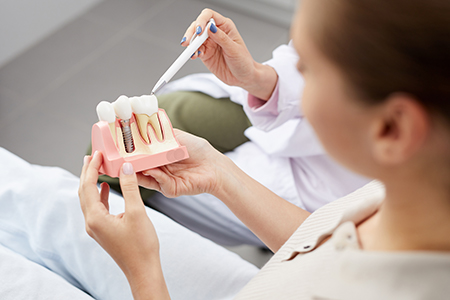
A dental implant is a small, biocompatible post placed into the jaw to act as an artificial root. Once the implant integrates with the bone, it becomes a stable anchor for a custom-made crown, bridge, or denture. This root-level support gives implant restorations superior stability compared with removable options, so chewing, speaking, and smiling feel more natural.
Beyond function, implants help maintain facial structure. When a tooth is lost, the supporting bone begins to remodel and shrink, which can alter facial contours over time. An implant stimulates the underlying bone in a similar way to a natural root, slowing or preventing this resorption and preserving your profile and soft-tissue support.
With precise planning—often aided by digital imaging—and careful restorations crafted to match your teeth, implants deliver both aesthetic harmony and reliable performance. The result is a restoration that integrates visually and functionally with the rest of your mouth.
Dental implants offer a range of benefits that address immediate needs and long-term oral health. They provide exceptional stability for single crowns and multi-tooth restorations, eliminate the risk of slippage associated with traditional removable dentures, and allow you to eat a varied diet without restrictions. Because implants act independently, they preserve adjacent natural teeth by avoiding the need to alter or crown them for support.
Another key benefit is durability. With appropriate care and regular dental checkups, implants can remain a lasting part of your mouth for many years. Unlike natural teeth, implants will not develop cavities. Maintaining surrounding gum health and plaque control is crucial to protect the supporting structures of the implant and ensure longevity.
For many patients, the functional improvements translate directly into better quality of life: clearer speech, easier chewing, and increased confidence. Clinically, implants also help maintain jawbone volume, which supports facial soft tissues and reduces the gradual collapse that can follow tooth loss.
Successful implant treatment begins with comprehensive planning. Digital radiographs and CBCT scans allow your clinician to evaluate bone volume and anatomy precisely, identify vital structures, and plan implant placement in three dimensions. Treatment may be staged or completed in a single sequence depending on the individual case.
After implant placement, a healing period allows the post to osseointegrate—bond—to the surrounding bone. While some situations permit immediate temporary restorations, permanent restorations are typically placed after integration is confirmed to ensure predictable function and esthetics. Follow-up care focuses on hygiene, monitoring tissue health, and maintaining bite stability.
Overall success rates for well-planned implants are high when patients follow recommended oral hygiene and attend scheduled maintenance visits. Careful case selection and modern surgical techniques are key to favorable long-term results.
Not every patient follows the same treatment timeline. During your initial consultation, the clinician assesses oral and overall health, reviews imaging, and discusses your goals. Factors such as bone volume, gum health, systemic conditions, and lifestyle habits are all considered when creating a tailored plan. When appropriate, adjunctive procedures—like bone grafting or gum treatments—are incorporated to optimize the foundation for implants.
Clear communication and education are vital throughout planning. We explain the recommended sequence of care, anesthesia options, expected healing times, and the nature of temporary versus permanent restorations so you know what to expect from day one through completion.
Treatment plans prioritize predictable healing and long-term stability. In many cases, modern guided-surgery techniques and digital workflows improve precision and reduce chair time, helping patients move through treatment with greater comfort and confidence.
Placing an implant is typically an outpatient procedure performed under local anesthesia, and additional sedation is available when appropriate. The surgery itself is often straightforward, involving a small incision and precise placement of the implant into the prepared bone site. Patients usually return home the same day with instructions for short-term care and follow-up appointments.
Healing protocols vary by case. Some patients receive a temporary restoration the same day, while others wait until osseointegration is complete. During the healing phase, protective measures and gentle oral hygiene help tissues recover and integrate properly with the implant surface.
After sufficient healing, the restorative phase begins: impressions, digital scans, and custom fabrication produce the final crown, bridge, or prosthesis. These restorations are designed to harmonize with your bite, shade, and smile design for a natural, functional result.
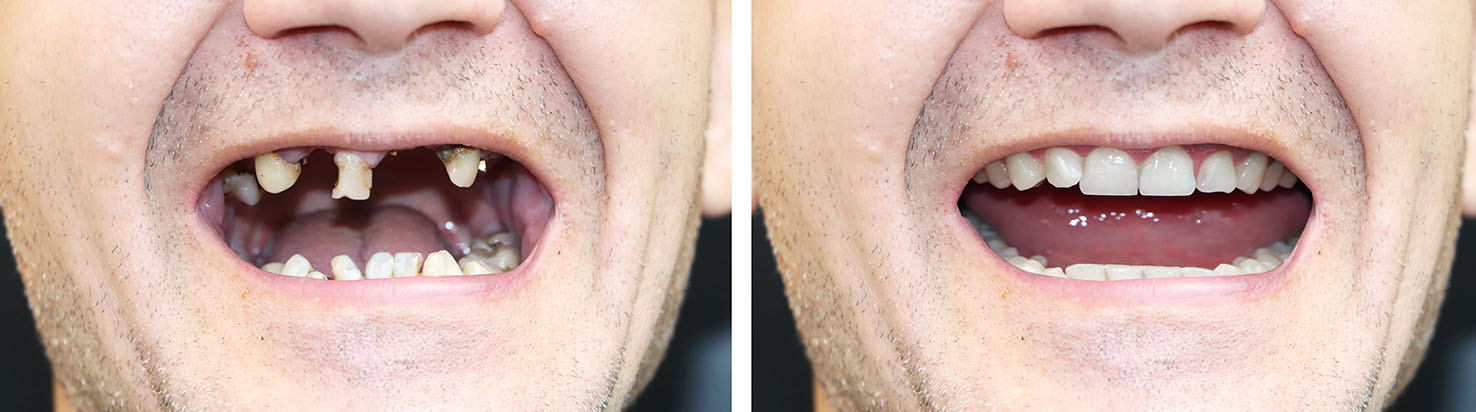
Successful implant placement depends on a stable, healthy bone foundation. If bone volume has diminished due to previous extractions, periodontal disease, or long-term tooth loss, a bone graft can rebuild the ridge to support an implant. Grafting can be performed at the time of extraction, before implant placement, or simultaneously with implant placement when circumstances allow.
Bone graft material and techniques vary; the aim is the same: to create a predictable environment for integration. With proper healing and maintenance, grafted sites can support implants as reliably as native bone, restoring both function and the natural contours of the jaw.
Monitoring and maintaining oral health after implant placement is essential. Routine dental visits, consistent home care, and addressing any changes promptly will help protect the life of your implants and the health of the surrounding tissues.
At Simply Smiles Dental Brooklyn, we focus on delivering implant care that respects each patient’s unique needs and aesthetic goals. Our clinicians use modern imaging and restorative techniques to design solutions that balance longevity with natural appearance. We collaborate with patients throughout planning, treatment, and maintenance so that outcomes are clear, comfortable, and durable.
Whether you’re replacing a single tooth or rebuilding an entire arch, implant therapy can restore the function and confidence that comes from a complete smile. If you’d like to learn more about how implants might fit into your oral-health plan, please contact us for more information and to arrange a consultation.

If you've lost a tooth due to injury, decay, gum disease, or any other reason, we recommend dental implants to replace missing teeth. Dental implants come the closest to replicating the look, feel, and function of your natural teeth.
Dental implants are placed into the jawbone and mirror the same function as the root of a tooth. The procedure for dental implants is usually performed while a patient is sedated. Patients who undergo IV sedation must have an empty stomach and transportation home following the procedure. Most sedation patients will have little to no memory of the procedure occurring.
Generally, dental implants are made out of a biocompatible metal such as titanium. Biocompatible metals are also used for other common bone implants (such as shoulder, hip, and knee replacements). The visible portion of the implant is usually made out of porcelain and is custom-made to match your existing teeth.
Dental implants are designed to fuse to the bone, which makes them become permanent fixtures. Typically speaking, the success rate is nearly 100%. There are few cases in which the implant will not fuse as intended and must be removed. If this happens to occur, the procedure can be attempted again a few months later.
Dental implants are not usually covered by dental insurance, but may be covered under a patient's medical insurance. Our office and your insurance company can discuss coverage options with you based on your individual case and treatment plan.
It's easy... just take care of an implant as if it's a natural tooth! This involves regular brushing, flossing, and dental checkups. If you have any concerns about your implant, contact us immediately.
A dental implant is a biocompatible post that is placed into the jaw to serve as an artificial tooth root. Over time the implant bonds with surrounding bone through a process called osseointegration, creating a stable foundation for a crown, bridge, or denture. Once integrated, the implant supports a restoration that is designed to match the appearance and function of natural teeth.
Because implants recreate root-level support, they provide superior stability compared with removable options and help preserve jawbone volume. The result is improved chewing, clearer speech, and a restoration that blends visually and functionally with your mouth. Implant therapy focuses on long-term health and predictable function when planned and maintained properly.
Candidacy for dental implants depends on several clinical and medical factors rather than age alone. Clinicians evaluate bone volume and density, gum health, existing dental conditions, and overall medical history to determine whether implants are appropriate. Imaging such as digital radiographs or CBCT scans helps the dental team develop a safe, individualized plan.
Current habits and medical conditions are reviewed because smoking, uncontrolled systemic disease, or certain medications can affect healing and integration. At SimplySmiles our clinicians work with patients and, when needed, their medical providers to optimize health before treatment and to create a predictable pathway to restoration.
The timeline for implant treatment varies with each patient and the complexity of the case. Initial consultation, imaging, and planning can be completed in a few appointments, while the surgical placement and the subsequent healing period for osseointegration typically take several months. If bone grafting or other preparatory procedures are required, they add time to the overall sequence to ensure a stable foundation.
In certain situations, immediate provisional restorations are possible, and digital workflows can streamline design and fabrication of restorations. Your clinician will explain the expected timeline for your specific plan, milestones for healing, and scheduling for the final prosthesis to ensure predictable function and esthetics.
Implant placement is usually an outpatient procedure performed under local anesthesia, and sedation options are available for patient comfort. The surgery involves a small incision to access the bone and precise placement of the implant into a prepared site, after which the area is closed and protected for healing. Most patients go home the same day with instructions for short-term care, rest, and pain management.
During the first week you can expect some swelling and mild discomfort that is typically managed with prescribed or over-the-counter medications and cold packs. Follow-up visits monitor healing and any temporary restorations, and careful home hygiene and adherence to postoperative instructions support successful integration and a smooth transition to the restorative phase.
Dental implants restore the tooth at the root level, which preserves adjacent natural teeth and supports the jawbone, while traditional bridges rely on neighboring teeth for support and removable dentures rest on the gums. Because implants are fixed in bone, they offer greater stability for chewing and speech and eliminate many issues related to slippage and sore spots that can occur with removable prostheses.
The best choice depends on oral conditions, patient preferences, and clinical objectives: implants often provide superior long-term tissue preservation and function, bridges can be appropriate for some situations, and implant-retained overdentures provide a hybrid solution when a removable option is preferred. Your clinician will review pros and cons for your case and recommend the option that best balances durability, hygiene, and esthetics.
Bone grafting rebuilds the jaw where bone volume has been lost due to tooth removal, periodontal disease, or prolonged tooth absence. Grafts provide a scaffold that encourages new bone growth and can be placed at the time of extraction, before implant surgery, or simultaneously with implant placement depending on the clinical situation. Material choices and techniques vary, but the goal is the same: to create a stable foundation for predictable implant integration.
When grafting is indicated, the clinician will explain the expected healing timeline and how it affects the overall implant plan. With proper healing and maintenance, grafted sites commonly support implants as reliably as native bone, and careful planning helps integrate grafting into a staged treatment pathway when necessary.
Maintaining dental implants requires the same basic hygiene practices as natural teeth: thorough brushing, daily interdental cleaning with floss or interdental brushes, and routine professional cleanings. Keeping plaque and calculus under control is essential to protect the surrounding gum tissues and supporting bone. Your dental team will demonstrate techniques and recommend instruments that work best around implant restorations.
Regular follow-up appointments allow clinicians to monitor tissue health, check bite stability, and address early signs of inflammation or wear. Avoiding tobacco and managing overall health factors such as blood sugar control will also support long-term implant success and preserve the restored smile.
As with any surgical procedure, implant treatment carries potential risks that include infection, slow or failed osseointegration, peri-implant inflammation, and, in rare cases, damage to adjacent anatomical structures such as nerves or the sinus. The likelihood of complications is reduced with careful planning, accurate imaging, and experienced surgical technique. Early recognition and treatment of issues such as soft-tissue inflammation can often prevent more significant problems.
Your clinician will discuss specific risks related to your medical history and the planned procedure and will outline steps taken to minimize complications. Adherence to postoperative instructions and routine maintenance visits are important parts of reducing risk and protecting the long-term health of the implant and surrounding tissues.
Age by itself is not usually a limiting factor for implant candidacy; many older adults are successful implant patients when overall health and oral conditions are favorable. Medical factors such as controlled diabetes, medications, or bone metabolism issues require careful evaluation because they can influence healing. The dental team will review your medical history, consult with other providers when appropriate, and tailor the treatment plan to your health status.
Modifications to surgical approach, timing, or follow-up care may be recommended to address individual medical considerations, and many patients with chronic conditions can still receive implants safely. Thorough planning and coordinated care help ensure that implant therapy is appropriate and predictable for each patient.
Full-arch tooth replacement can be achieved with several implant-based strategies, including fixed full-arch restorations supported by four or more implants, All-on-4 or All-on-6 approaches, and implant-retained overdentures that snap onto fewer implants. Fixed restorations provide a nonremovable solution that closely mimics natural teeth, while implant-retained overdentures offer improved retention with the convenience of a removable prosthesis. The choice depends on bone anatomy, esthetic goals, hygiene considerations, and functional needs.
Our team at SimplySmiles evaluates each patient with advanced imaging and clinical assessment to recommend the approach that balances durability, comfort, and maintenance. A consultation will clarify which full-arch solution aligns with your oral health, lifestyle, and long-term objectives and will outline the clinical steps needed to reach a stable, comfortable outcome.
Quick Links
Contact Us